Tag: tree care

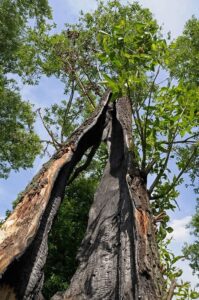
tree inspection can identify dangerous trees - tree cavity - stein tree service

What Causes Tree Stress and How to Prevent Stressing Trees

Many societies and cultures throughout human history have associated trees with resilience, sturdiness, and longevity. While trees are undoubtedly resilient, they are still vulnerable to harmful factors that can cause stress or damage. Tree stress is can result from certain adverse factors, and if left untreated, that stress can eventually lead to the tree’s death. Fortunately, many organizations, such as state departments of natural resources or conservation, are studying trees to help determine and alleviate current threats.

Current Threats to Trees and Factors of Tree Stress

Tree stress can result from several different factors. Biological elements such as insects, pests, and diseases can cause stress, as well as mechanical or human-caused factors such as improper planting, chemical use or construction.

Insects and Diseases
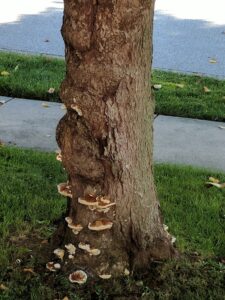
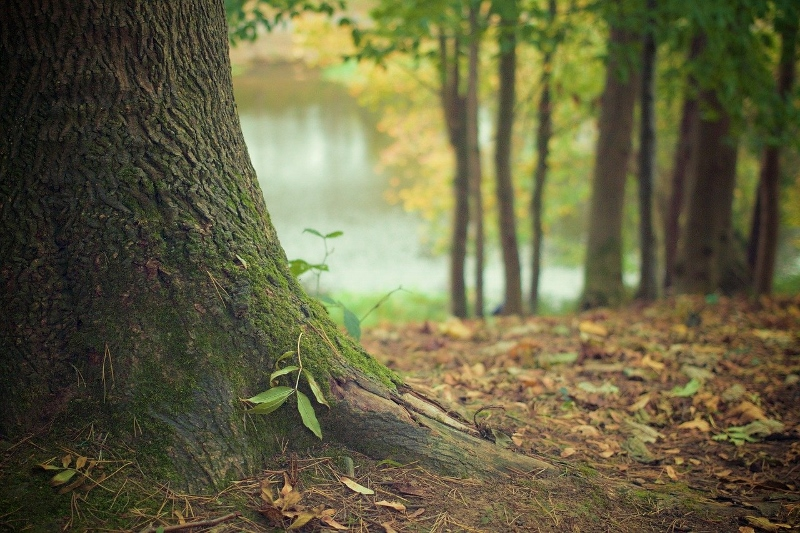
Fungus on tree trunk | Tree stress | Stein Tree Service

One of the more severe threats to trees is insects and diseases. Specific insects and diseases can have genuinely devastating impacts on the health and sustainability of trees in both forest landscapes and urban areas. The Department of Conservation and Natural Resources (DCNR) monitors Pennsylvania’s forests for insects and diseases, protecting trees when necessary.

Current insect and disease threats to Pennsylvania trees include the following:

  • Emerald ash borer
  • Spotted lanternfly
  • Gypsy moth
  • Hemlock woolly adelgid
  • Beech bark disease
  • Oak wilt

Emerald ash borer, spotted lanternfly, gypsy moth, and hemlock woolly adelgid are all invasive species, and have caused severe damage to Pennsylvania trees. Diseases such as oak wilt and beech bark disease each threaten specific species of trees.

Natural and Environmental Factors
Tree damaged by storm, aftermath | Tree stress | Stein Tree Service

In addition to insects and diseases, other natural occurrences and environmental properties can cause tree stress. One of the significant issues with environmentally-caused stress is that affected trees, even young and healthy ones, are more susceptible to diseases and invasive insects.

  • External factors that can stress trees include:
  • Drought
  • Excessive moisture
  • Pollution
  • Abnormal or extreme temperatures
  • Wind damage

New trees can replace those that are stressed by these environmental factors. However, invasive species such as the emerald ash borer and spotted lanternfly alter the natural reforestation cycle.

Improper Planting and Maintenance

Human-made causes of stress can be attributed to improper planting and poor or neglectful maintenance. Improper planting can range from picking the wrong tree for the local soil conditions, to planting a tree too close to a road, to having too little mulch. Poor maintenance includes inadequate watering or pruning techniques.

Another factor is injuries caused by mechanical means, such as construction or lawn-related damage. A lawnmower or trimmer cutting the bark or compacting the soil can cause tree stress. Heavy construction equipment can also stress trees, with most of the damage occurring in the root system due to soil compaction and disruption.

How to Prevent Tree Stress

One of the ways to effectively prevent stress is to be watchful for pests and other signs of stress. Look for bark dieback, wilting leaves, tree cavities, and other symptoms that a tree is injured or damaged to some extent. Insects can be hard to see, so you have to look at the overall tree health. can blend into trees. Check your trees, outdoor equipment and furniture, gardens, and similar areas for invasive species such as emerald ash borer and spotted lanternfly.

If you are unsure whether a tree is stressed or damaged, contact a certified arborist. Arborists and tree care specialists have the knowledge and experience to identify threats to a tree’s health and know what measure to take for proper care. The most effective method to treat for tree stress is to stop whatever is causing harm as soon as possible.

Call Stein for Quality and Reliable Tree Care Services

Stein Tree Service has been in business since 1983 and has a long history of serving the Pennsylvania area. Our experienced staff and state-of-the-art equipment are ready for immediate response for emergency tree care services. If you want to learn more about tree stress, or how your landscape could benefit from tree care services, contact us today for a free consultation.

West Chester Certified Arborist

The History of Arbor Day And How You Can Celebrate

At a time when more of us are appreciating the beauty of the trees and our landscape, we would like to examine the history of Arbor Day. Celebrated this year on April 24, 2020, Arbor Day is a national holiday where people all across the country celebrate the role of trees in our world. As a tree care service company, we are passionate about tree care and promote the observance of this holiday.

Continue reading

adult spotted lanternfly on a tree

The Spotted Lanternfly Quarantine Has Been Expanded in PA: What You Need to Know

In Pennsylvania, the spotted lanternfly quarantine has been expanded to include 12 new counties in advance of the hatching that occurs in spring. So far, these counties have a few municipalities with a known infestation, rather than complete contamination. Still, the spotted lanternfly has done enough damage to Pennsylvania’s environment and various industries to warrant such caution. In addition, the ISA (International Society of Arboriculture) and the TCIA (Tree Care Industry Association) have designated that taking care of invasive pests including the spotted lanternfly are considered essential services under the shelter in place restrictions for Pennsylvania and Delaware. Below is everything you need to know about spotted lanternflies and the expanded quarantine.

Quarantine Guidelines

The quarantine has been established to limit the spread of spotted lanternfly, which is a “hitchhiker” and tends to catch a ride to other areas on vehicles or things being transported. Trucks carrying loads from outside the quarantine area into the area, or through the area if they are stopping inside, must acquire permits. Businesses, such as landscapers or professional tree care companies, must be certified to work in quarantine areas. Fines may be assessed for noncompliance with the quarantine.

The additional counties bring the number of counties under quarantine in Pennsylvania to 26. The newest counties added are:

  • Allegheny
  • Beaver
  • Blair
  • Columbia
  • Cumberland
  • Huntingdon
  • Juniata
  • Luzerne
  • Mifflin
  • Northumberland
  • Perry
  • York

Spotted Lanternfly Facts


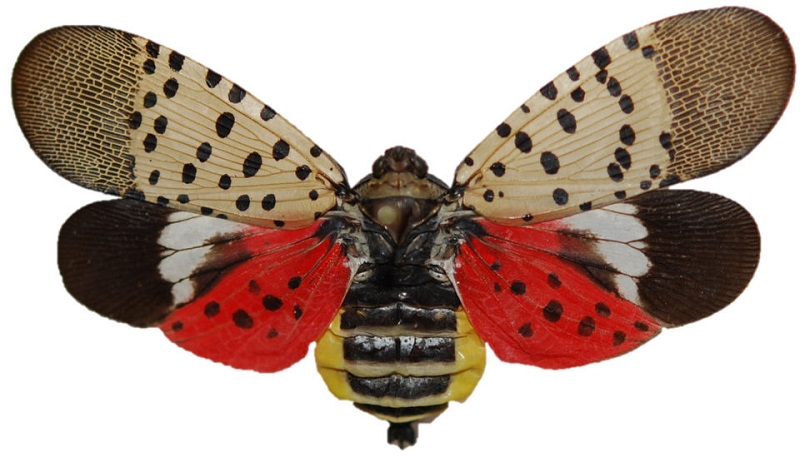
Spotted lanternfly with wings open | spotted lanternfly quarantine | Stein Tree Service

The first recorded spotting of the spotted lanternfly in the United States was in 2014, and the pest is found mostly in states along the east coast, particularly Pennsylvania.

Adult lanternflies have black heads, and are about one inch long. Their most distinctive feature is gray wings with small black spots. When flying, the bug shows smaller bright red wings, which are hidden during rest. Younger lanternflies look more like larvae and have black spots, slowly gaining a red color with age.

Spotted lanternflies can quickly expand their presence, flying or hopping onto vehicles or transported materials, including:

  • Firewood
  • Construction or landscaping materials
  • Outdoor equipment or furniture
  • Crates or boxes

The Tree of Heaven is the preferred host for the spotted lanternfly, but other trees such as fruit and pine trees may also be affected.

How You Can Help Protect Your Trees

Though the spotted lanternfly quarantine has been expanded, the spotted lanternfly could show up anywhere. One way that you can help Pennsylvania manage this invasive pest is by being diligent and looking out for any signs of spotted lanternflies or activity. Spotted lanternfly blend in when resting on trees, so residents must be observant.

We also encourage you to look out for egg masses. Egg masses will either look similar to smears of mud or vertical rows of seed-like eggs. These will be found on trees, and because late-April and May are typically when these eggs hatch, inspecting your trees right now is especially vital.

Contact Stein Tree Service for Tree Services in Spotted Lanternfly Quarantine Areas

The spotted lanternfly is a growing problem. The spotted lanternfly quarantine has been expanded for this reason. Stein Tree Service is committed to the health of our trees and helping homeowners maintain a healthy landscape. If you see the pest or evidence of activity, contact us for a consultation.

Tree and plant roots | Tree Root Health | Stein Tree Service

How to Ensure Tree Root Health

The roots of a tree serve many vital functions. Roots are responsible for anchoring the tree in place, absorbing and distributing water and nutrients, and even acting as a storehouse for essential food reserves during winter. The importance of tree root systems is what makes good tree root health critical to ensuring the overall health of the tree. We will teach you what causes root problems, how to identify these symptoms, and how to keep both the roots and tree healthy.

How Tree Roots Become Unhealthy

Problems caused by poor tree root health are generally due to either injury or disease.

Root Injury

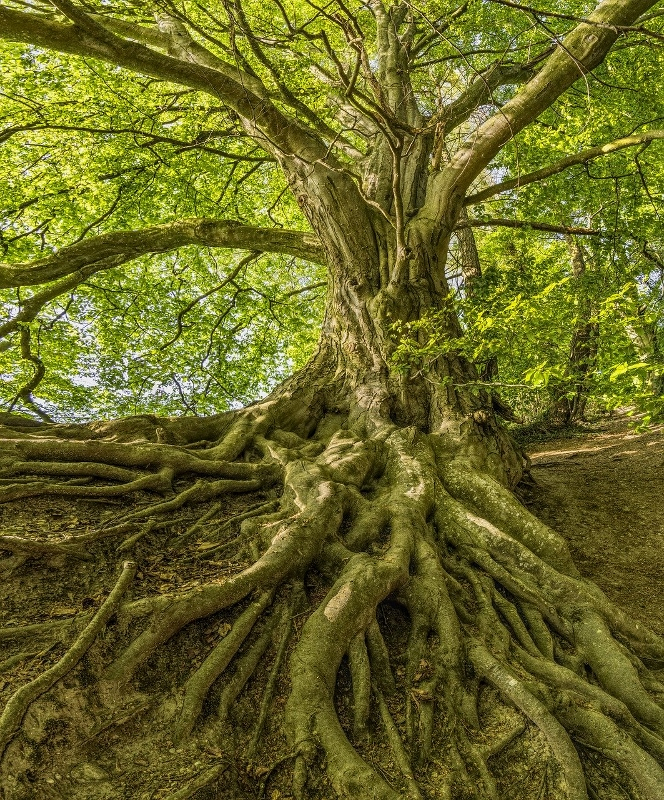
Tree trunk with roots | Tree Root Health | Stein Tree Service

For trees in urban areas, a common cause of root injury is heavy clay subsoil and soil compaction. The reduced pore space from heavy clay and soil compaction reduces the amount of water and oxygen that the tree roots can uptake. Compacted soil may be caused by construction, foot traffic, car and other machine traffic, soil preparation, and more.

Improper watering is another cause for poor tree root health. Overwatering restricts oxygen uptake while underwatering provides inadequate root development. Improper fertilization can also damage tree roots, and those roots may face competition from other plants such as bushes, grass, and other trees.

Root Diseases

Injury is just one way for tree roots to become less healthy. Disease from fungi is another threat to the overall health of the roots. Fungal diseases will generally affect one of the 2 types of roots in a tree. Most diseases will affect the feeder roots, the small, thin roots responsible for absorbing water and minerals from the soil surface. Other fungal diseases will affect the woody roots, the large roots responsible for anchoring the tree.

Some of the symptoms of tree root disease include the following:

  • Small, yellow, foliage
  • Reduced growth
  • Leaf scorch
  • Tufted leaves at the end of branches
  • Branch dieback

While all of these symptoms may indicate root disease, a direct examination by a certified arborist or plant health care specialist will confirm the condition of the roots.

How to Keep Tree Roots Healthy

Tree with large roots above ground | Tree Root Health | Stein Tree Service

The best way to ensure tree root health is to prevent the roots from being damaged or diseased. A tree needs a space that is both deep and wide enough for adequate root growth. Proper fertilization and the right amount of watering also keep the roots healthy. Add a layer of mulch, preferably mulch made of organic matter. For mature trees, the mulch layer should be a maximum of 3 to 4 inches.

Maintain the right soil conditions by avoiding soil compaction, changing the soil depth as little as possible, and keeping the tree’s root zone free from competing plant life. Pruning and trimming injured tree limbs is another way to ensure roots remain healthy by reducing the risk of infection.

Once a tree becomes infected and the roots become diseased, restoring the health of the tree can be difficult. Calling an arborist to provide an in-depth examination and analysis of the tree health will give you a better understanding of what the issue is and how to improve the tree’s health.

Contact Stein Tree for Tree and Plant Health Care Services

Stein Tree has provided the Wilmington and Philadelphia areas with high-quality, reliable tree care services for decades. We have state-of-the-art equipment that is ready for immediate and emergency responses. Our certified and insured arborists have the passion, knowledge, and experience to ensure tree root health for any landscape, from residential to municipal.

For a free consultation, contact us at (302) 478-3511 today!

Man in compact spider lift using arborist saw on a tall tree - tree removal and tree trimming and pruning - Stein Tree Service

Stein Tree Discusses How to Safely Trim Tall Trees

Tall trees on your residential or business property add much value: shade, aesthetics, property value, and even reduced heating and cooling costs. But the size of these trees makes maintaining them more difficult and dangerous. Experienced arborists have the training and knowledge to keep you and your property safe. Here are the risks associated with tall tree trimming and pruning, and how to safely trim tall trees.

Why and How an Arborist Should Trim Tall Trees

We want to emphasize that the best method to trim tall trees is to contact a certified arborist. The safest methods and techniques of cutting tall trees involve specialized training and equipment that most people lack. Climbing up the tree and trimming branches should be left to certified and licensed professionals for the best results.

Climbing a Tall Tree

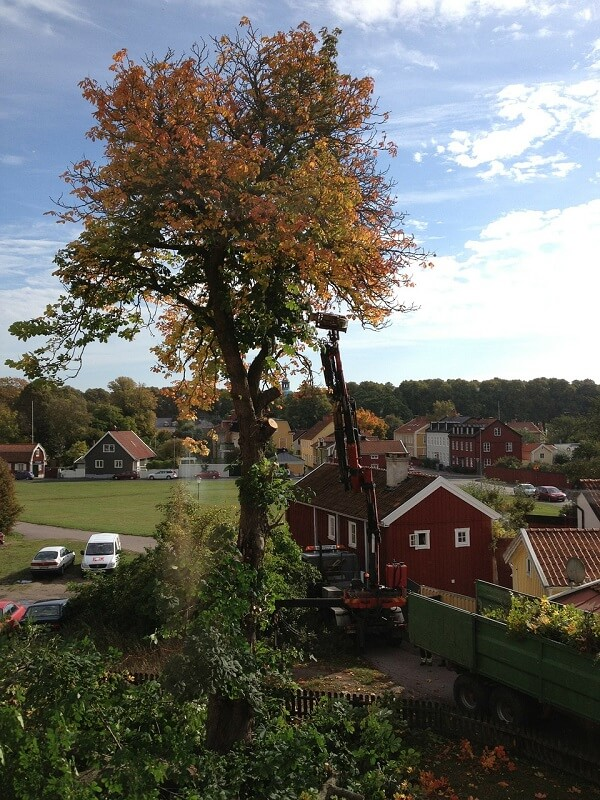
Lift truck with tall tree | trim tall trees | Stein Tree Service

The first risk that comes with trimming tall trees is reaching the top. Pruning the branches of tall trees involves a much greater falling risk, and the chance of serious injury becomes more significant. The climbing method also needs to be safe, and any climbing equipment needs to be secure and stable. Experienced arborists know how to safely tether themselves to prevent a fall.

Equipment such as pruning shears or chainsaws are brought up to cut the branches. Careful cuts that ensure the safety of the trimmer, the people below, the property, and the health of a tree, need to be performed. The method arborists use to cut branches allows the tree to heal correctly and makes the actual cutting safer for the arborist. Numerous tree branches, larger branches, and other interfering objects such as power lines, create awkward and uncomfortable working angles.

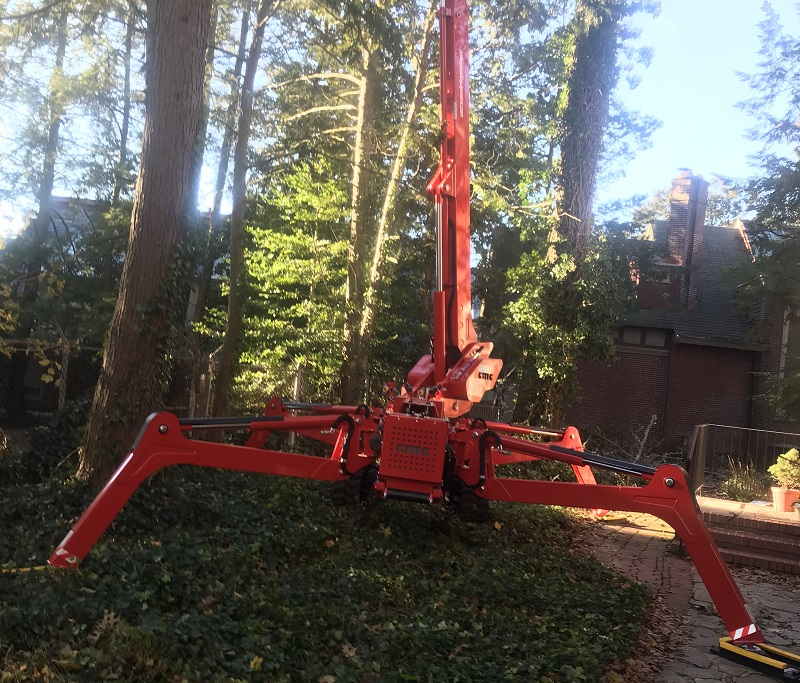
Professional arborists will have access to specialized equipment and the proper training and certification to safely trim a tall tree. Stein Tree Service professionals use a spider lift or a lift truck to safely reach high branches.

Arbor Pro Mini Lift | trim tall trees | Stein Tree Service

A spider lift allows the arborist to work safely and access the tree from different angles. For close pruning, professionals use cordless top handle chainsaws, also called arborist chainsaws. These tools are lighter and easier to control than a standard chainsaw.

For trimming and shaping, tree care professionals often use powered long-handled or telescoping hedge trimmers. These tools, along with blowers, vehicles, lifts, and chippers, allow arborists to effectively and safely trim tall trees.

Call Stein for Quality and Reliable Tree Trimming Services

Stein Tree Service has been in business since 1983 and has a long history of crew, property, and tree safety. Our staff and state-of-the-art equipment are ready for immediate response. We have provided tree care services to thousands of customers throughout Delaware, Pennsylvania, and Maryland. If you need to trim tall trees or have other tree care needs, contact us today for a free consultation.

adult spotted lanternfly on a tree

What Is Beneficial Insect Release And How Do Beneficial Insects Work?

Maintaining healthy landscaping, trees, shrubs, and other plants often requires work and labor from either the owner or a tree and plant health care specialist. But one method is to let insects do the job instead. Beneficial insect release has become an increasingly popular method for homeowners to maintain their gardens and landscapes in a natural, sustainable way.

What Are Beneficial Insects?

Beneficial insects are insects that perform valuable tasks to sustain an ecosystem, such as pollination and pest control. Many people perceive all insects as pests, but insects are vital to their ecosystems. In addition to pollination and pest control, many insects provide soil fertilization or food for other insects and animals.

For example, bees pollinate flowers, collecting the nectar, and using that nectar to produce honey. A farmer can take advantage of this by using bee boxes and creating a sustainable cycle that benefits both him and the bees.

Pest Control

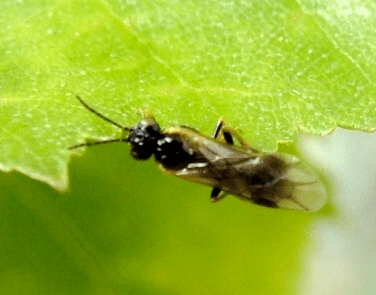
Mature Birch Leafminer | beneficial insect release | Stein Tree Service

Using insects as a form of natural pest control has become more prevalent in recent years. Organic farmers and gardeners commonly use this form of biological pest control, as do tree and plant health care specialists as part of integrated pest management plans. An example of beneficial insects used for pest control is the ladybug.

Ladybugs are predators to aphids, which are small, sap-sucking insects that can damage plants and leaves. If a gardener is having trouble with aphids, a pest control specialist can distribute ladybugs to control the aphid population, without using chemicals that might cause more harm to the gardener’s plants. Other insects, such as green lacewings and praying mantises, are also used for pest control. A special kind of wasp, parasitoid wasps, which are natural predators of emerald ash borer (EAB) in their native Asia, has been released in some areas to fight the EAB invasion.

Benefits of Beneficial Insect Release

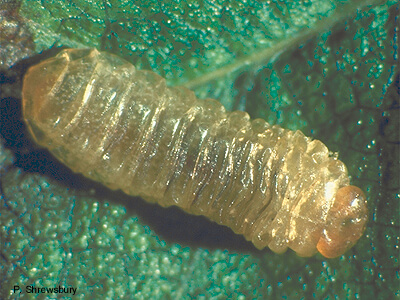
Leafminer Larva | beneficial insect release | Stein Tree Service

One of the primary benefits of using beneficial insect release is that the process avoids chemical pest control methods such as pesticides. While pesticides are effective at controlling and eliminating pests, some plants and beneficial insects like bees can be affected negatively. Beneficial insects are a natural, organic, and environmentally sustainable way to control pests. Many insects have also shown to have growing resistance to pesticides. Predator creatures avoid that issue entirely.

Beneficial insects also fit into the larger goal of integrated pest management: to control pests while preserving the natural environment and ecosystem as much as possible. Nature has many self-regulating elements, and predator insects are one element from which humans and landscapes can benefit.

How to Use Beneficial Insects

Taking proper advantage of beneficial insects involves much more than only releasing them into a landscape.

Choose the Right Species

The first step to utilizing beneficial insect release is to determine what pests are affecting a landscape, the location of the pests, the extent of the damage, and any other information a pest management specialist needs to create the best plan. The pest management specialist uses this information to determine what species of insects would lead to the best results. Different pests have different natural predators. Selecting the best species for the job is a crucial first step.

For example, the Tetrastichus planipennisi parasitoid wasp is too small to be effective against EAB in mature trees. A larger specimen, the Spathius agrili, can penetrate the thicker bark of mature trees.

Maintain the Environment

Beneficial insects need to be in an environment that allows them to thrive. For example, Delaware’s yearly climate tends to be moderate, with average monthly temperatures ranging from 76 to 32 degrees Fahrenheit. So, a proper beneficial insect release plan needs to select insects that thrive in these temperatures. Humidity is another factor that affects which insects will thrive.

Choose Optimal Timing

When the pest management specialist and the property owner are ready to distribute the insects, timing is key. If, for example, parasites are being released into a landscape, a host (the organism attacked by the parasite) must be available. Some releases are dependent on the life cycles of the pests. Beneficial insects should also be released when food sources are plentiful, allowing the insects to survive for longer periods.

Contact Stein Tree Service for Tree and Plant Health Care Services

If you have issues with pests in your landscape, call Stein Tree Service. We have provided quality service in areas such as Wilmington and Philadelphia for over 35 years and we are certified to treat for EAB and to work in spotted lanternfly quarantine areas. Our certified arborists have decades of knowledge and experience, and our equipment is state-of-the-art. For a free consultation, contact us today.

row-of-trees-what-is-a-windbreak-stein-tree-service

What Is A Windbreak, And How You Can Plant One

Winter weather typically brings winter winds, and that means turning up our heating systems to stay warm indoors. But with windbreaks, you can stay warm and reduce your heating and even cooling costs. Even though you might have seen one, you may be curious and ask, “What is a windbreak?” As tree care specialists, Stein Tree discusses how windbreaks work, the benefits of having one, and how to plant one.

What Is A Windbreak?

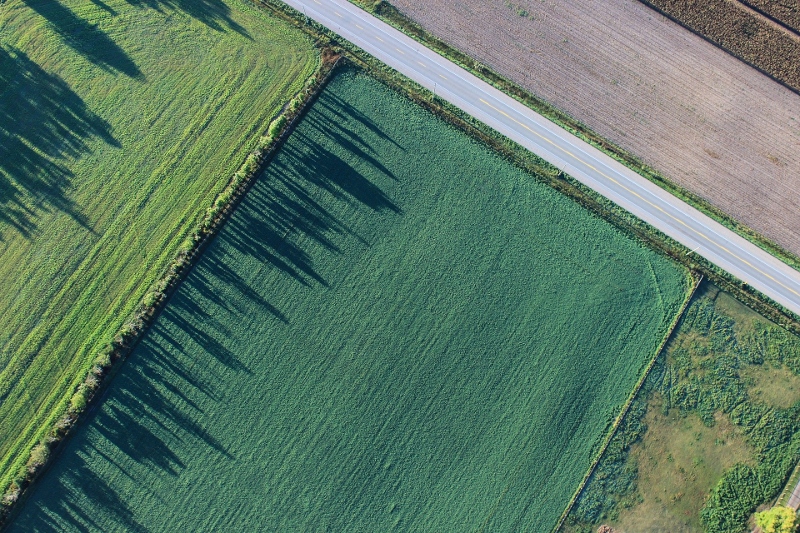
Aerial view of farm, what is a windbreak, Stein Tree Service

A windbreak, sometimes called a shelterbelt, is a planting, usually of multiple rows of trees or shrubs that are planted specifically to provide shelter from the wind. Windbreaks are also used to protect soil from erosion. An example would be a hedgerow around the edges of a farm or a row of trees separating farm fields from one another.

Windbreaks can also act as barriers for snows, keeping snow from drifting onto nearby roads or yards. That barrier works both ways, as sometimes farmers use them to keep snow on farmland, which provides water for crops when the snow melts. Although we personally prefer trees and shrubs, non-plant barriers such as gates with fabric, glass barriers, or plastic fences can be wind barriers, too.

How Does a Windbreak Work?

As a gust of wind approaches the windbreak, the air pressure builds up on the windward side (the side towards the wind) and decreases on the leeward side (the side away from the wind). The trees force the wind to flow up and over, and eventually, the air pressure pushes the wind back down and to the original level.

Say a house has a row of trees in the backyard, and the wind is 35 mph. The aerodynamics of the trees reduce wind velocity in both the back and front yards, becoming only 10 mph and 15 mph respectively. That results in less cold air moving into the house, keeping the warm air inside; the reverse happens in summer (cool air stays inside while hot air stays outside.)

Another segment of air affected by a windbreak is a layer of still air near a building called the boundary layer. Boundary layers in winter consist of warmer air from the house, which gets swept away with the wind, causing the home to get colder. The trees prevent most of the wind from reaching the house and retains that boundary layer, keeping the walls, windows, and house warm.

All of this results in lower heating costs during the winter and lower cooling costs during the summer. Well planted trees in the right spots can help you reduce your heating costs up to 30%. Trees and shrubs use less energy which means the house and utility company use fewer fossil fuels, which means less carbon dioxide emissions.

How to Plant a Windbreak

Shrubs, what is a windbreak, Stein Tree Service

So now that we know the answer to “what is a windbreak?” and “how does a windbreak work?” the next step is knowing how to plant one. First, where the trees get planted is important, because each region has different prevailing winds. In Delaware, for instance, the wind tends to blow from the northwest, while in winter winds in Pennsylvania are primarily from the west and northwest. For distance, the trees should be planted a maximum of one or two tree heights from the house. Ideally, the trees should also be around a one or two tree-height distance from the rooftop and driveway to prevent snow from accumulating too close to the house.

The simplest windbreak is a single row of trees planted far enough away that, once mature, the trees can block wind effectively. Two staggered rows of trees is another effective pattern. Irregular spacing and placement can also work if you want a more unique landscape.

The type of trees or shrubs planted also matters. For trees, ones that are sturdy enough to withstand strong winds and that grow fast are ideal. Trees with a conical shape and a lot of branches close together are highly effective at blocking the wind. Evergreen trees such as the Douglas Fir and White Spruce species are great choices. Pines trees such as the Eastern Red Cedar or Northern White Cedar also make good choices.

Contact Stein Tree for Quality Tree and Shrub Services

While farmers most commonly use windbreaks, anybody can have one in their landscape. To learn more about trees and their benefits, contact the experienced certified arborists at Stein Tree Service. Since 1983, Stein Tree has been providing Delaware and Pennsylvania residents with high quality, comprehensive tree services. For a free consultation, contact us today.

forest tree ordinances

Stein Discusses Pennsylvania Tree Ordinances

Pennsylvania, translated from Latin to mean “Penn’s Woods,” was both a fitting and accurate name for this region. Approximately 58 percent, or roughly 16.8 million acres, of land in Pennsylvania, is a forest. Trees have played a vital role in the lives and communities of Pennsylvania, and that was planned from the start with tree ordinances.

What Is A Tree Ordinance?

town sidewalk with trees, tree ordinances

A tree ordinance is a document that helps protect and manage a community’s trees. The ordinance can regulate tree planting, maintenance, and removal on both public and private property within that municipality. The ordinance can also specify tree requirements, such as the size, spacing, quality, quantity, location, and even the type of trees allowed to be planted in certain areas.

Willian Penn drafted the first tree ordinance in America while he was planning early settlements near Philadelphia. One effect of his action was that colonists planted trees along streets to emulate the European cities they came from. Tree ordinances became more detailed around the 20th century. In 1907, Pennsylvania authorized municipal tree commissions, which oversee tree ordinance administration and other urban forestry actions.

Types of Tree Ordinances

According to the International Society of Arboriculture a tree ordinance usually falls into 3 basic categories:

  • Street tree ordinances, which focus on the planting and removal of trees within public rights-of-way.
  • Tree protection ordinances, which focus on the protection and maintenance of native species or historically significant trees.
  • View ordinances, which focus on conflict resolution between property owners that arise when trees block views or sunlight.

Other ordinances that are indirectly related to the community aspect of trees also exist. A municipality may use a timber harvest ordinance, which can regulate the commercial and industrial use of trees for wood products. Ordinances regarding subdivision and land development can also address trees.

Creating a Tree Ordinance

Developing and drafting a tree ordinance can take a lot of time and effort. Those interested in creating a tree ordinance for their community will need to define what the purpose of the ordinance will be, setting the jurisdiction of the local government, policies carrying out the various ordinance provisions, and many more.

A tree ordinance is an effective tool that communities use to enhance and preserve their trees and all of the benefits that come with them. More than 100 municipalities in Pennsylvania have tree ordinances, and those ordinances keep those trees and communities looking beautiful.

Trust Stein for Your Tree Care Needs

Stein Tree Service has been providing skilled tree care services to residents, businesses, and municipalities for over 35 years. We care about trees, and tree ordinances help communities maintain proper tree care. For a free consultation about tree care services such as tree trimmingtree removal, emergency storm clean up, and more, contact us today.

trees along sidewalk and brick wall

Stein Discusses How Trees Benefit Businesses

We have previously talked about the benefits of trees and the importance of tree care, and most people understand that trees provide long-lasting positive impacts on themselves and their communities. Trees give us beauty and allow us to appreciate nature even in an urban environment. And of course, everybody knows the environmental benefits. But the impact of trees goes beyond personal, social, and even environmental benefits. Stein Tree discusses how trees benefit businesses and why tree care is a good investment.

Continue reading

City street lined with yellow trees in Autumn - tree city - Stein Tree Service

Stein Discusses Tree Care and Tree Cities

Trees provide numerous benefits, making them a vital part of a community. These benefits encourage us to properly maintain and even increase a city’s trees. The Arbor Day Foundation, a conservation nonprofit and the largest nonprofit dedicated to tree planting and tree care, has a program just for this mission: Tree City USA.

What is Tree City USA?

Sidewalk lined with trees | Tree City | Stein Tree Service

Tree City USA is a program started by the Arbor Day Foundation in 1976. The program gives communities the tools and support network they need to preserve, manage, and expand their publicly owned trees. Over 3,400 recognized communities and 143 million people live in or near a tree city. Below are some of our local cities that have qualified as Tree Cities.

  • Wilmington, DE
  • Newark, DE
  • West Chester, PA
  • Malvern, PA
  • Media, PA

What are the Benefits of Tree Care and Being a Tree City?

In addition to the beauty of trees, many of the benefits of a town or city becoming a tree city have to do with the natural impact of numerous healthy trees. Studies have shown several health benefits people get from living near parks and forests, such as improved immune systems, increased mood, reduced stress, and an improved ability to focus, even in children with attention deficit hyperactivity disorder (ADHD).

Plenty of economic benefits exist as well. Trees, and good landscaping in general, increase property values, with mature trees increasing values by up to 20 percent. Trees also act as natural air conditioners. More than just adding shade, when water evaporates from the leaves, the conversion to air vapor removes heat energy from the air. The U.S. Forest Services says “strategically placed trees save up to 56 percent on annual air-conditioning costs.”

How to Make Your Community a Tree City

The Arbor Day Foundation outlines 4 standards that must be met in order for a community to become a registered tree city. The city must

  1. Maintain a tree board or department
  2. Have a community tree ordinance
  3. Spend at least $2 per capita on urban forestry
  4. Celebrate Arbor Day.

The Arbor Day Foundation also has several resources online that include checklists, worksheets, and applications, that must be submitted in order to qualify and begin the process.

Trees are more than a pleasing sight; they provide many tangible benefits to entire communities, both rural and urban. Whether you live in a tree city or just want to enjoy trees in your landscape, planting new native trees and learning about good tree care are great ideas.

Contact Stein Tree Service for Experienced Tree Care in Pennsylvania and Delaware

Stein Tree Service has been a trusted tree care service company for over 33 years. Our certified arborists and other tree specialists are conscientious about preserving the tree and plant health in Pennsylvania and Delaware landscapes. For tree removal, tree trimming and pruning, pest infestation treatment and storm clean up services, or information about tree care, contact us today or explore our website.