4 Reasons Why You Should Remove a Dead Tree
A dead tree might seem harmless if still upright, but without structural integrity, it poses a risk to people, buildings, vehicles, walkways, and nearby healthy trees. Property owners often must act quickly when they find a dead or declining tree.
At Stein Tree Service, we see dead trees in all kinds of places—backyards, office parks, school campuses, and public spaces—throughout Delaware, Pennsylvania, and Maryland.
- For homeowners, a dead tree can put their house, driveway, fence, or even their kids’ play area at risk.
- On commercial properties, dead trees can create liability issues, hurt curb appeal, and make it harder for tenants, employees, or customers to get around safely.
- For towns and cities, the stakes are even higher. Dead trees can pose a threat to roads, sidewalks, parks, schools, and other public spaces.
No matter where the tree is, the first step is always a careful inspection and a practical plan for the next steps.
Understanding Why Removing Dead Trees Matters
Not every tree needs to come down. Sometimes, a stressed or declining tree can be saved with the right care. But if a tree is truly dead or has lost its structural strength, removal is usually the safest choice.
Homeowners risk damage to roofs, fences, garages, or vehicles. Commercial sites face liability, blocked access, and reduced curb appeal. Municipalities risk harm to people and public spaces. If 50% or more of a tree is dead or damaged, removal is typically the safest option.
1. Safety Risks of Dead Trees
Safety is the number one reason to remove a dead tree. As the wood decays, the trunk, limbs, and roots lose strength. This risk goes up during:
- High winds
- Heavy rain
- Snow and ice
- Saturated soil conditions
- Storms with sudden gusts
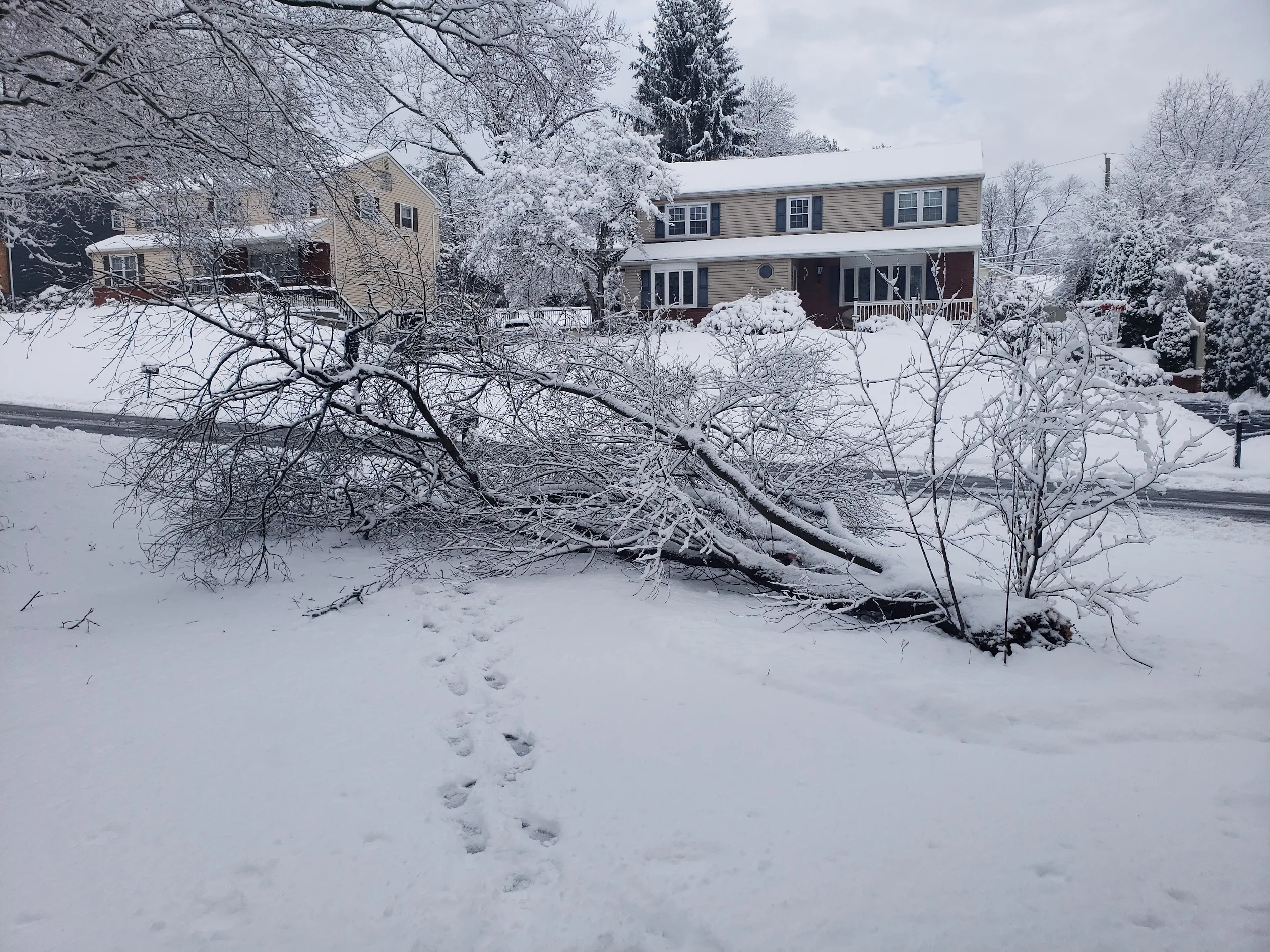
Even on a calm day, dead tree branches can fall without warning. After storms, dead trees are even more likely to drop limbs or lean, making things even more dangerous over time.
Dead trees can damage property or block important access points for homeowners, businesses, and towns. This can affect safety, signage, and busy walkways or driveways.
2. Pest Attraction and Disease Spread
Dead and dying trees often attract insects and can become a staging point for more problems around the property. Wood-boring insects, termites, and other pests are drawn to decayed wood, and visible activity around the trunk or branches can signal that decay is already well underway. Emergence holes, feeding galleries, and woodpecker holes are signs that a tree may have severe pest problems that require inspection.
A dead tree changes the property’s environment, often for the worse.
This matters even more on properties with:
- Mature trees planted close together
- Landscaped commercial grounds
- HOA or campus-style plantings
- Parks, streetscapes, and public green space
Disease is another concern. Some trees die from fungal infections, root defects, or severe pest damage. Fungal fruiting bodies frequently appear on dead or dying trees, and fungi at the tree’s base signal possible root or structural issues. If one tree is compromised, nearby trees should also be checked, especially in mature landscaping, on campuses, or along dense streets.

3. Impact on Property Appearance and Usability
Safety comes first, but looks matter too. For homeowners, a dead tree can make your yard look neglected, no matter how much work you put into the rest of your landscape. For businesses, it hurts first impressions and makes the property seem less cared for. In public spaces, even a single dead tree can make a park or street look neglected.
Dead trees may block driveways, shade unwanted areas, obstruct replanting, or leave stumps that impede mowing or walking.
Contact Stein Tree Service today to schedule an inspection and receive expert advice on safely and properly removing your dead tree.
4. Waiting Makes Removal More Difficult and Expensive
Many property owners think they can put off dealing with a dead tree, but waiting almost always increases the risk and can turn a manageable problem into a much bigger one.
The longer a dead tree is left standing, the more brittle and unstable it gets. Taking it down gets trickier, especially if it’s near buildings or busy areas. Removing it early is usually much easier than waiting until decay sets in.
Delaying removal can lead to damage that could have been avoided. Fallen branches, roof damage, blocked driveways, or emergency tree service calls after a storm almost always cost more than a planned removal.
Taking care of a dead tree before it fails is almost always the smarter, more practical choice.
How To Tell If a Tree May Be Dead
Some signs are easier to spot than others. A dead tree often shows more than one of the following during a tree health analysis:
- Large sections of the canopy are without leaves during the growing season
- Brittle twigs and branches that snap easily
- Bark falling off in large pieces
- Deep cracks in the trunk
- Hollow or soft areas in the wood
- Mushrooms or fungal growth on the trunk or near the base
- Large dead limbs throughout the crown
- Sudden leaning or signs of root movement
- No visible new growth when the surrounding trees are active
Not every struggling tree is dead. Some are stressed or damaged but still recoverable with proper care. Get an expert assessment before deciding.
Does Every Declining Tree Need to Be Removed Right Away?
This is an important difference. A tree with thinning leaves, some storm damage, or a bit of deadwood isn’t always a lost cause. Pruning, better soil care, cabling, bracing, or just keeping an eye on it can sometimes make all the difference.
Stein Tree works with property owners seeking practical guidance, not a one-size-fits-all answer. If your tree can be managed safely and preserved, let’s discuss your options. If it is dead and poses a risk, contact us to schedule a removal.
What Professional Dead Tree Removal Involves
Removing a dead tree is different from taking down a healthy one. Dead wood can break sooner, and in unexpected ways, and hidden internal decay can make the job trickier.
A professional tree removal plan usually starts with an on-site evaluation that looks at:
- The condition of the trunk and canopy
- The tree’s lean and stability
- Nearby homes, garages, fences, and parked vehicles
- Sidewalks, roads, and pedestrian areas
- Overhead utility lines
- Access for trucks and equipment
- How will debris be lowered and removed safely
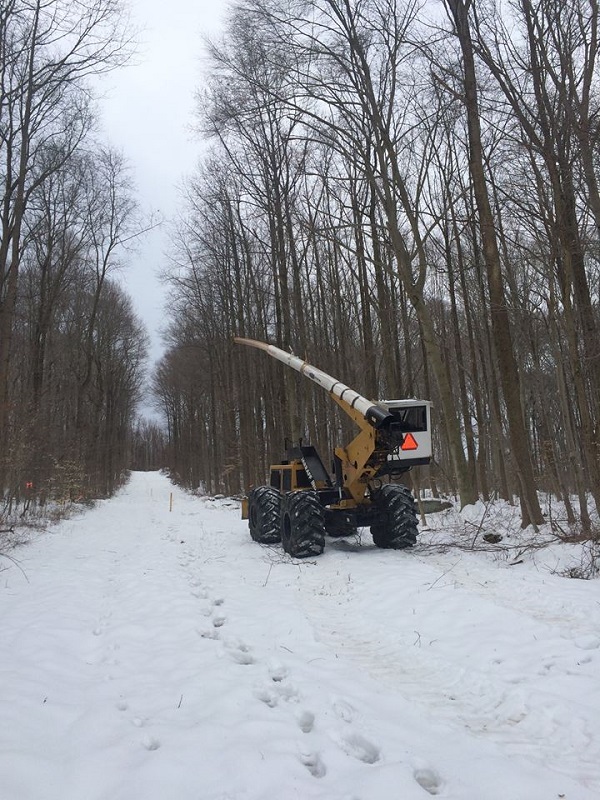
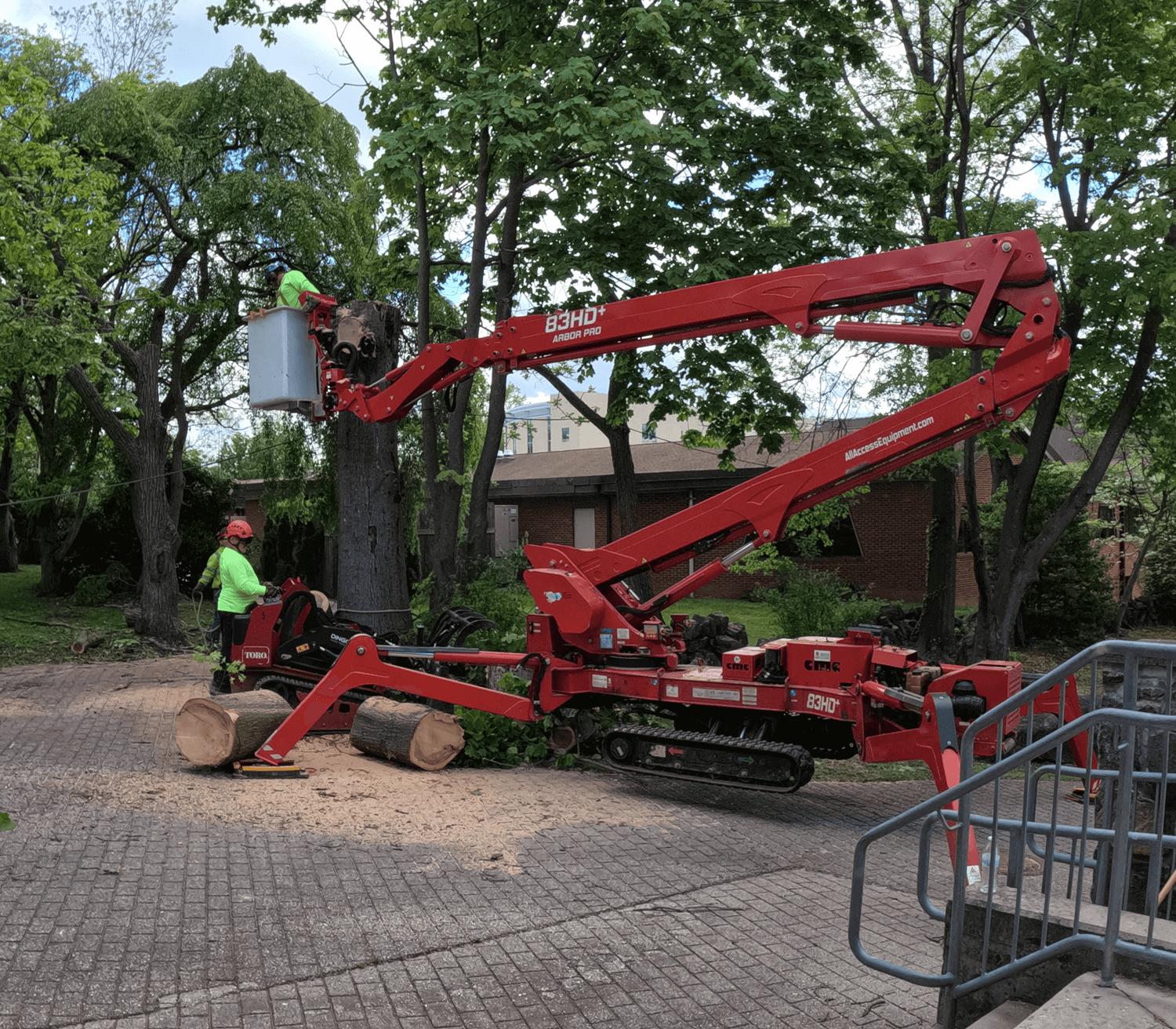
Depending on the site, removal might involve climbing, rigging, taking the tree down in sections, using aerial lifts or cranes, and running wood through chippers or stump grinders. The right approach depends on the tree’s size, available space, and any nearby hazards.
Post-Removal: Dealing With Stumps
Once the tree is removed, the stump is the next decision.
Some people leave the stump for a while, especially if it’s out of the way. But in most cases, stump grinding is the cleaner, longer-term fix. It makes your yard look better, eliminates a mowing obstacle, and makes it easier to replant or landscape.
Are you ready to restore your landscape? Contact Stein Tree Service to discuss stump grinding as part of your tree removal plan.
Preventing Future Tree Deaths
No one can prevent every tree problem, especially after severe weather or as trees age. But regular care can help you spot issues earlier and avoid emergency situations.
A preemptive tree care service plan may include:
- Periodic tree inspections
- Structural pruning
- Monitoring for pests and disease
- Soil and root care
- Cabling or bracing when appropriate
- Early removal of high-risk trees before they fail
This is especially important if you have mature trees, areas that get heavy use, or landscapes where both safety and appearance matter.
Why Choose Stein Tree Service
-
FREE
ConsultationWe offer a free consultation with our experts to evaluate your landscape and its current or potential problems. We provide a solution based on YOUR landscape needs.
-
Expert Care by Certified Arborist
Our arborist is ISA-certified and experienced in all types of plant and tree problems, including pests like emerald ash borer, plant and tree disease, and damaged trees.
-
Transparent Pricing & Clear Quotes
You’ll receive a straightforward, comprehensive written estimate, and you get to choose which services you want so you know what’s included before scheduling.
-
Licensed and Insured
We are fully licensed and insured, protecting your interests as well as ours. While our team consists of highly experienced professionals, our comprehensive insurance coverage means you’re protected against any unforeseen incidents.
We get many questions from residents about tree care, our services, and our policies. Below are some of our frequently asked questions.
FAQs About Tree Service Insurance
-
Should you remove a dead tree?
Yes, especially if the tree is near a home, driveway, sidewalk, parking area, roadway, playground, or other active part of the property. Near people and structures, removal is often the safest option.
-
How can you tell if a tree is dead or just stressed?
A stressed tree may still show live buds, flexible twigs, or partial leaf growth. A dead tree usually has widespread brittle wood, major canopy loss, bark failure, and signs of decay. If you are unsure, an inspection is the best next step.
-
What are the risks of leaving a dead tree standing?
The biggest risks are falling limbs, whole-tree failure, property damage, safety hazards, pest activity, and declining appearance. Those risks tend to increase over time, not decrease.
-
Can a dead tree fall even if the weather is calm?
Yes. Storms raise the risk, but dead limbs and weakened trunks can fail even in normal conditions.
-
Does a dead tree always need to be removed immediately?
Not always immediately, but it should be evaluated promptly. The timeline depends on its size, condition, location, and what could be affected if it fails.
-
How much does dead tree removal cost?
It depends on the tree’s size, location, site access, nearby hazards, how far the decay has progressed, and whether stump grinding is included. The most accurate way to price the job is with an on-site estimate.
-
Can I cut down a dead tree myself?
Dead trees are more unpredictable than healthy ones because decay weakens the wood, altering how the tree behaves during cutting. DIY removal is especially risky when the tree is large, leaning, or near structures or power lines. Professional assessment is the safer route.
Contact Stein Tree for Tree Removal Services
If you think you need to remove a dead tree, the safest first step is to have it checked by an experienced tree service team. A dead tree can impact safety, how your property looks, the health of nearby plants, and even your long-term maintenance costs. The closer it is to where people spend time, the more important it is to act quickly.
Stein Tree Service provides tree care and removal services to residential, commercial, and municipal clients throughout Delaware, Pennsylvania, and Maryland.
Need help deciding whether a dead or declining tree should be removed? Contact Stein Tree Service to schedule a free, no-obligation consultation and get a practical recommendation for your property.
Featured Programs

Stein has a permit to work in spotted lanternfly quarantine areas in Pennsylvania and Delaware. Tree Service Companies have to be trained in proper moving and disposal of materials to avoid spread of the spotted lanternfly and Stein has completed the training courses.

In the spring, destructive ash borer (EAB) adult beetles begin to emerge. These invasive pests can destroy your ash trees. Our specialists are certified to treat for EAP in Pennsylvania and Delaware. For A free consultation, contact us today.